December 27, 2024
|14 mins

Content marketing is a marketing strategy designed to attract, engage, and retain an audience by creating and sharing valuable, relevant, and consistent content across various formats like articles, videos, and podcasts. This approach helps establish expertise, build brand awareness, and ensure your business remains at the top of customer’s minds when they are ready to buy what you are selling. Content marketing leverages digital assets—like text, images, and video—to reach and connect with a targeted audience. In this guide:
Content marketing creates and shares valuable content to educate, inspire, and engage your audience. It uses four main formats: written, audio, video, and imagery. Businesses combine these formats across social media, websites, and ads to connect with their audience. This approach builds brand awareness and earns trust. Once trust grows, audiences engage more readily with product-focused content like demos, reviews, or brochures. In the enterprise space, content marketing empowers buyers to self-educate. Sales teams then guide customers by addressing complex use cases and answering product questions.
Content marketing has become a cornerstone of marketing strategy, offering a proven path to meaningful customer engagement and competitive advantage. In an era where customers are inundated with irrelevant advertisements, content marketing cuts through the noise by focusing on delivering value. Instead of bombarding audiences with promotional messaging, it prioritizes education, inspiration, and trust-building, meeting customers at every stage of their journey.
The statistics speak for themselves:
These figures highlight why content marketing is not just a tactic but a necessity for brands looking to thrive in a digital-first world. Customers demand value—not noise. Traditional, ad-heavy approaches no longer resonate. Instead, content marketing puts the customer first, offering meaningful insights, solutions, and resources that align with their needs at every stage of their journey. Done right, content marketing doesn’t just promote products; it builds trust, drives engagement, and positions your brand as an essential partner in solving customer challenges.
 An effective content marketing strategy delivers real, measurable results. Here’s how it works:
Content that addresses customer pain points ensures your brand gets noticed. By optimizing articles, videos, and blogs for search engines, you increase your chances of being found by those actively seeking solutions.
Informative, problem-solving content attracts prospects who are genuinely interested in what you offer. These leads are more engaged and ready to trust your expertise, making them easier to nurture and convert.
Loyal customers don’t just buy—they advocate. By consistently delivering content that educates and supports, you deepen relationships and keep customers coming back.
Sharing thought leadership and insights on critical topics solidifies your position as an industry leader. When customers view you as a trusted resource, they’re more likely to turn to you when it’s time to buy.
Content marketing is a long-term investment. Unlike traditional ads with limited lifespans, valuable content continues to deliver results over time, driving down costs and maximizing returns.
Your expertise becomes tangible when customers see you address their challenges directly. This credibility not only strengthens relationships but also differentiates your business from competitors.
The shift from advertising to value-driven marketing isn’t a trend; it’s a necessity. Customers today are tired of irrelevant, sales-heavy messaging. Instead, they seek out brands that offer solutions, inspire confidence, and empower them to make informed decisions. Content marketing bridges that gap. It creates a space for meaningful interactions, helping prospects move seamlessly from awareness to consideration—and ultimately to action. High-tech companies, in particular, can benefit by using content marketing to simplify complex ideas, address technical challenges, and build trust in a competitive marketplace. With the right strategy, your prospects are no longer “sold to”—they sell themselves on your value.
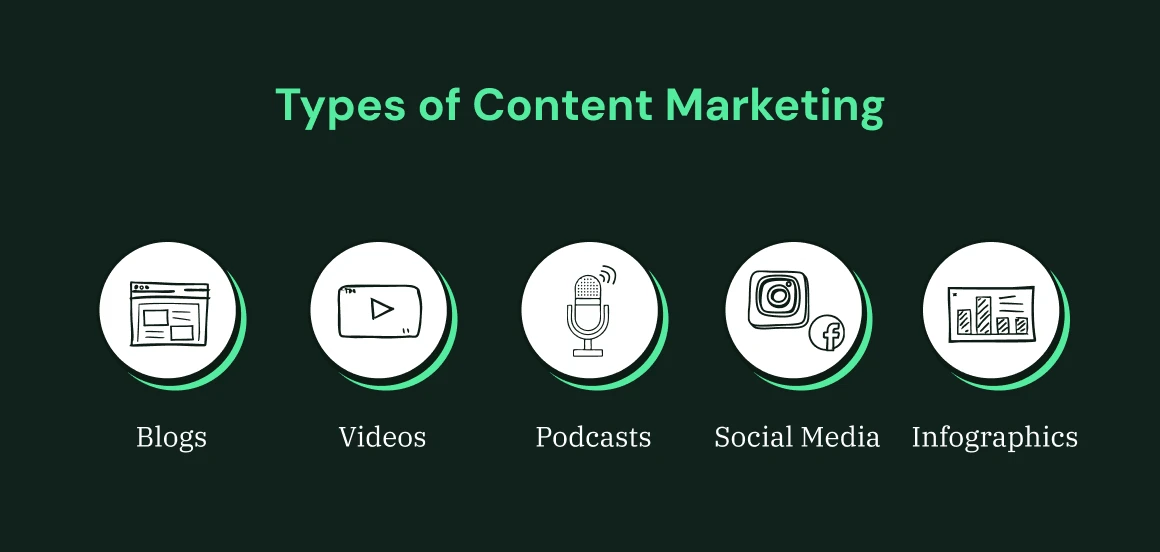
Blogs are written resources aimed to educate, engage, and build trust. Thoughtfully crafted blogs help your brand stay relevant and visible, making them indispensable for long-term growth. Blogs are essential for businesses aiming to showcase expertise, address trending topics, or promote products. Most companies publish blogs on their websites, while some also create guest blogs to boost SEO and build backlinks. Though primarily text-based, effective blogs often include custom visuals or videos to increase engagement and stand out. Blogs are highly popular because they cater to both human readers and search engines, making them a cornerstone of any content marketing strategy.
Video is a dynamic way to connect with your audience, simplify complex ideas, and evoke emotion—all in seconds. Whether shared on your website or platforms like YouTube and LinkedIn, video content is highly engaging and easy to consume. Smartphones have made video production faster and more affordable while enhancing quality with visuals, music, and voiceovers. This accessibility has turned video into a vital component of any content marketing strategy.
Customers prefer multimedia because it’s easier to digest and share. Videos grab attention quickly and resonate longer, making them indispensable for building brand loyalty and spreading awareness. For B2B brands, high-quality video content signals professionalism and authority. By investing in video, you not only captivate your audience but also streamline your broader content efforts, ensuring maximum impact across channels. Though brands have been slow to adopt video in the past, it’s now a must-have in any content marketing strategy. Video is more engaging and shareable, making it an essential format for reaching and resonating with your audience. Moreover, a single 10-minute video can be repurposed into multiple content forms, such as blogs and social media posts, accelerating your content marketing efforts and maximizing your return on investment.
Although many businesses hesitate to embrace podcasting due to the audio-only format, it’s an increasingly valuable platform for reaching and engaging customers.
Social media marketing is a key extension of content marketing, where businesses create and share content across relevant social platforms. This includes text, images, and video. Brands typically choose a mix of platforms that align with their audience’s interests, with popular choices like Instagram, Facebook, TikTok, Pinterest, and YouTube. B2B brands also find success on LinkedIn and X. Social media offers a unique advantage by allowing businesses to connect with customers in real-time, creating engagement beyond traditional email or website interactions. It allows followers to share content, amplifying your reach and potentially making your brand go viral. Whether organic or paid, social media also serves as a powerful referral channel, driving traffic to your website.
Infographics are a powerful form of content marketing that transforms complex data and statistics into visually appealing formats. While they are a staple in B2B marketing, infographics are also effective in B2C contexts, especially for explaining instructions or showcasing product features. Businesses often repurpose existing content, such as survey results or studies, and convert key insights into clear, engaging infographics. These visuals are valuable because they break down complex ideas into easy-to-understand, shareable graphics. In today’s fast-paced digital world, where audiences prefer skimmable content, infographics make it easier for consumers to grasp information quickly. Additionally, businesses can repurpose infographics into smaller images, making them perfect for sharing across social media platforms.
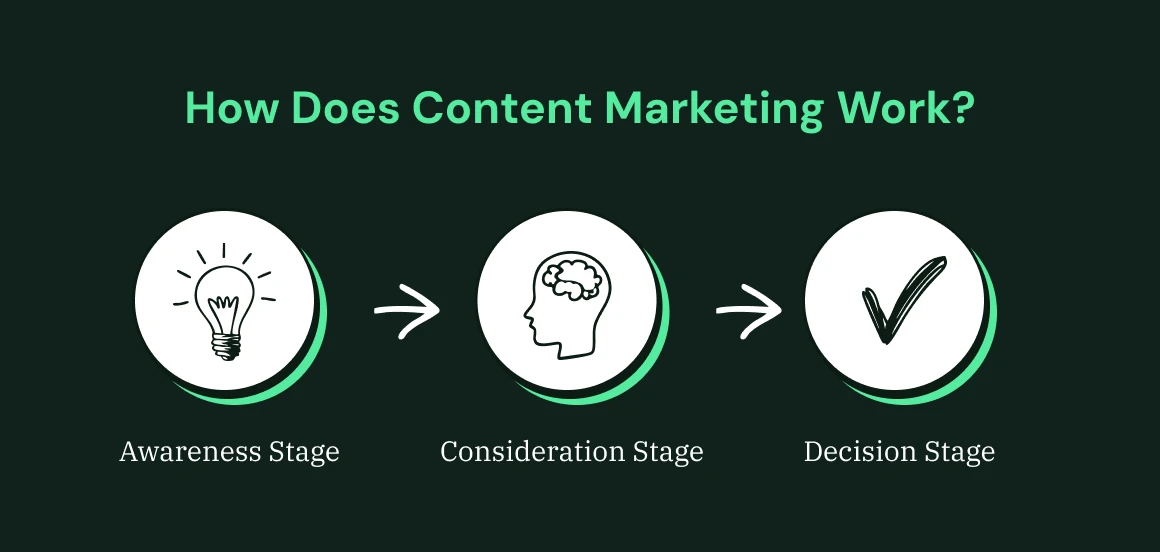 Once you’ve chosen the types of content marketing your business will create, it’s time to develop a strategy. Content marketing’s goal is to build stronger relationships and address customer needs, so your strategy should focus on the three key stages of content marketing. Content marketing helps attract leads, demonstrate the value of your product or service during research, and close sales. To use it effectively, deliver the right content at each stage of the sales cycle—from awareness to consideration and purchase. While it may seem complex, breaking it down into stages makes the process easier. Here’s how businesses use content marketing at each stage of the sales cycle to engage and convert customers.
At the awareness stage, the goal is to capture attention and address the pain points or challenges your audience faces. At this point, customers may not even realize they have a problem, so content should be educational and informative without focusing on your products or services. The best content for the awareness stage includes blogs that answer common questions, helpful how-to videos, or introductory eBooks. Examples:
In the consideration stage, customers recognize their problems and start evaluating possible solutions. Here, your content should provide more specific information about how your offerings can solve their problems but still remain helpful and educational. The goal is to nurture the relationship while subtly introducing your products or services. Examples:
No tags available for this post.
Please enter your email address so we can send you a one-time pass code and verify if you are an existing subscriber.
 CA
CA 

 CA
CA